
A practical guide to the options and upgrades worth considering before you order pedestal cluster mailboxes.
Ordering pedestal cluster mailboxes involves more decisions than most buyers anticipate. Beyond choosing the right unit size, you’ll want to think through door ID options, finish colors, decorative accessories, and parcel capacity — each of which affects the final look, tenant experience, and lead time of your order. This guide walks through each option so you can place your order with confidence.
Options and upgrades overview
Colors
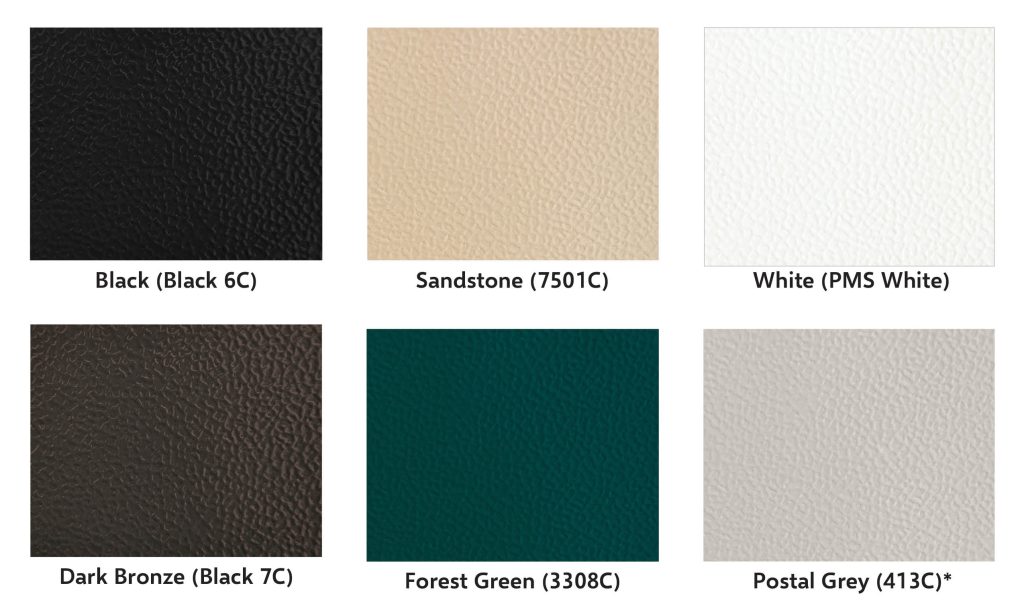
All cluster mailbox units are available in six architectural colors, each finished in a durable powder coat that resists weather and UV exposure. All six standard colors are priced the same. Sandstone, black, postal grey and dark bronze will typically ship the fastest, especially with standard decals.
When choosing a color, consider the exterior palette of the building or neighborhood where the units will be installed. Darker colors like black and dark bronze tend to conceal minor scuffs and weathering better over time, while lighter options like sandstone and postal gray offer a cleaner, more contemporary look in the right setting.
Door ID options
Decals vs. engraving
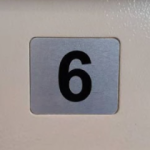
All cluster mailbox units (CBUs) come standard with silver adhesive decals featuring black lettering. Each decal is 1.5 inches high by 1.75 inches wide and supports up to five characters. Decals are applied during production. The silver adhesive decals have a reflective quality and are easier to read at night.
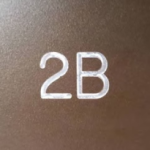
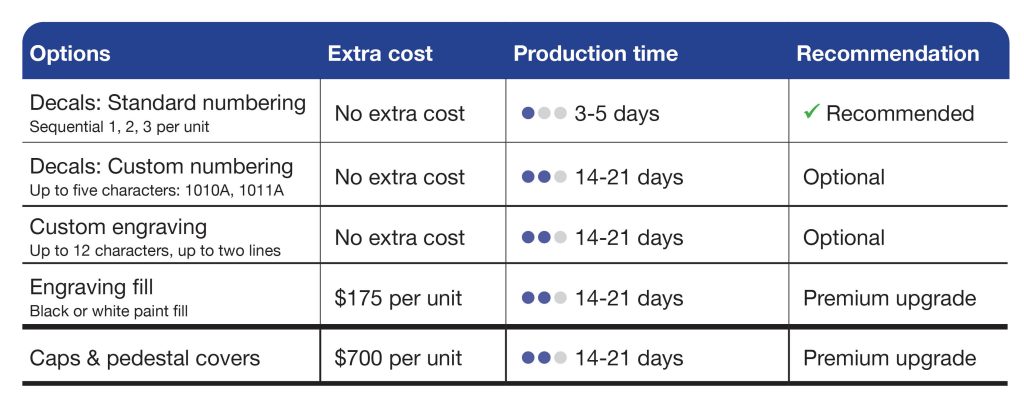
Custom engraving is an upgraded alternative that gives the unit a more permanent, upscale look. Engraving uses the USPS Standard US Block font at ¾” tall with numbering options of standard or custom. Custom engraved numbering can include up to 12 characters across one or two lines. There’s no added charge for engraving itself — but it does extend production time.
If you’d like the engraved text to stand out visually, you can opt for engraving fill, which paints the recessed lettering in either black or white. This is a purely cosmetic enhancement that enhances readability and is priced at $175 per cluster mailbox cabinet unit. We recommend you select white fill for black, forest green or dark bronze mailbox units and select black fill for sandstone, white or postal gray mailbox units.
- Our recommendation: standard decals. They ship faster, cost less, and are easy to replace if a door is ever damaged or swapped out. Engraving is a great upgrade for high-end or permanent installations where aesthetics matter and lead time is flexible.
Standard decals: standard numbering vs. custom numbering
Standard numbering means every unit you order ships with sequential numbers beginning at No. 1. If you order three 1570-12 units, for example, each unit will include doors numbered 1–12. It’s the simplest option, and orders ship faster as a result.
Custom numbering allows you to use up to five characters — letters and numbers — per door decal. This is useful if you want tenant box numbers to match apartment unit numbers or another internal system. There is no additional charge for custom numbering, but it does add production time to your order, so plan ahead if you have a firm installation deadline.
Note on parcel boxes: Parcel box numbering cannot be customized due to USPS regulations. Parcel doors are always labeled 1P through 6P, regardless of how tenant doors are numbered.
- Our recommendation: standard numbering. Tenant box numbers don’t need to correspond to physical apartment addresses. USPS carriers know exactly which box belongs to which tenant — the numbers on the front of the door are for the tenants’ reference, not the mail carrier’s. Once residents learn which cabinet their box is in, most won’t rely on sequential unit numbers anyway. Standard numbering also protects tenant privacy — neighbors can’t tell at a glance which box is assigned to which unit.
Overall recommendation: standard decals with standard numbering. Not only is this option the most affordable with the quickest production time, but it also provides the highest degree of readability and offers privacy to your tenants.
Coordinating caps and pedestal covers
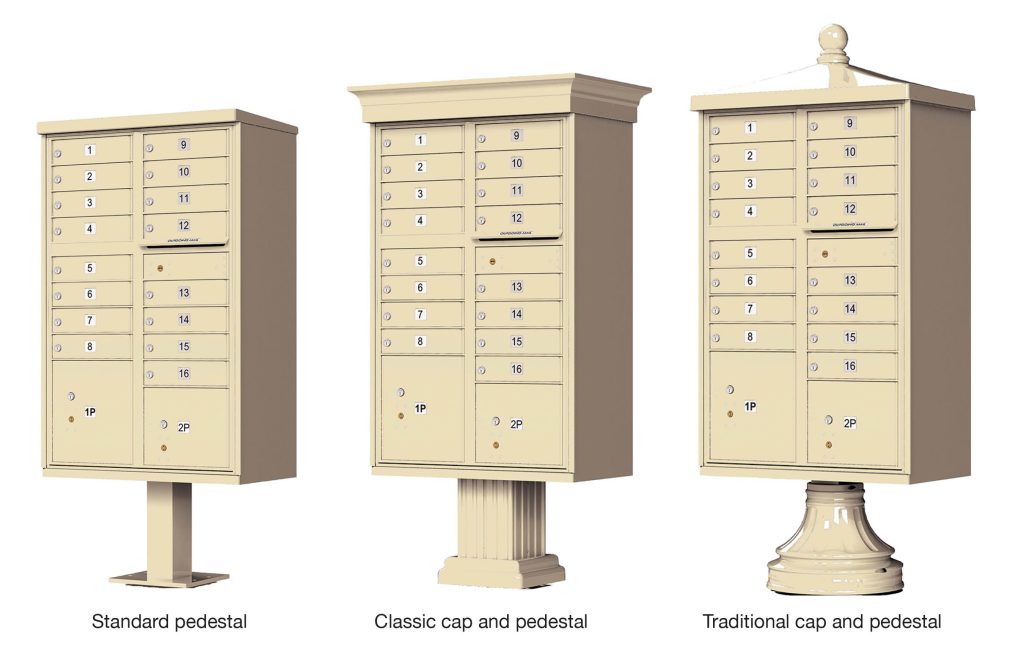
For a more finished, architectural appearance, color-coordinating caps and pedestal covers are available in two styles — Classic and Traditional. Both are compatible with every cluster mailbox unit and outdoor parcel locker in the lineup.
These decorative accessories are a popular upgrade for managed communities, HOAs, and multi-family developments where curb appeal matters. They give the installation a cohesive, intentional look rather than the purely utilitarian appearance of a standard installation.
Keep in mind that caps and pedestal covers add approximately 25% to 40% to the cost of your order. If budget is a constraint, they can always be added later — but planning for them upfront ensures a consistent look from day one.
Do you need additional parcel boxes?
Parcel volume has grown dramatically over the past several years and shows no sign of slowing. Nearly 20% of all retail purchases are now made online and delivered to home addresses. That means a meaningful share of your tenants are receiving packages on a regular basis — and inadequate parcel capacity leads to missed deliveries, package theft, and tenant frustration.
The federal standard calls for one parcel box per 5 tenant boxes for indoor mail centers. While the 1570 outdoor cluster mailboxes are USPS approved as is — for example the 1570-12 only has one parcel box — our recommendation to follow the 5:1 ratio. Some jurisdictions don’t enforce the federal minimum and some local postmasters do require more parcel boxes — so it is best to check with your local postmaster. The cost of adding a parcel box upfront is far lower than managing complaints or retrofitting a solution later.
If you’re ordering the 1570-12, 1570-13, or 1570-16 units, you should give serious consideration to pairing them with at least one outdoor parcel locker. These standalone lockers provide additional secure parcel doors and integrate cleanly with your cluster mailbox installation.
Quick rule of thumb: Think about how often your own household receives packages in a given week. If the answer is more than once or twice, your tenants are likely in the same boat — and one parcel door per 10 mailboxes won’t keep up.
Have questions? We’re here to help.
The Mailbox Directs team is always available to assist with your mailbox project. Whether you’re deciding between numbering options, choosing a color, or sizing out parcel capacity for a large development, we’ll help you build the right cluster mailbox solution for your neighborhood or building complex.
